
What if Some of Our Stories
Are Harming Students
As humans, our brains are wired to rely on hidden biases and mental shortcuts. The upside? These cognitive shortcuts help us manage complex tasks with ease and efficiency. The downside? They often act as emotional shields, leading us to:
Blame others
🌱 instead of reflecting and learning from our own mistakes.
Focus on problems
🌱 rather than strengths.
Hold tightly to outdated assumptions
🌱 like our own long-past school experiences.
In short, these mental habits can subtly distort our understanding. It can become all too easy
—especially in an increasingly complex and polarized world—
to react to challenges by blaming schools and their teachers.
What if Some of Our Stories
Are Misguiding the Very People We’re Trying to Support
—students—
by giving them reasons NOT to try, and schools NOT worth connecting to.
What if Some of Our Stories
Have Hidden Costs
Blaming Strategies
—how people assign fault for negative events—
can quietly and significantly influence beliefs, feelings, and people’s engagement over time.
because When you adopt blaming strategies,
it is easy for negative spirals to prevail.
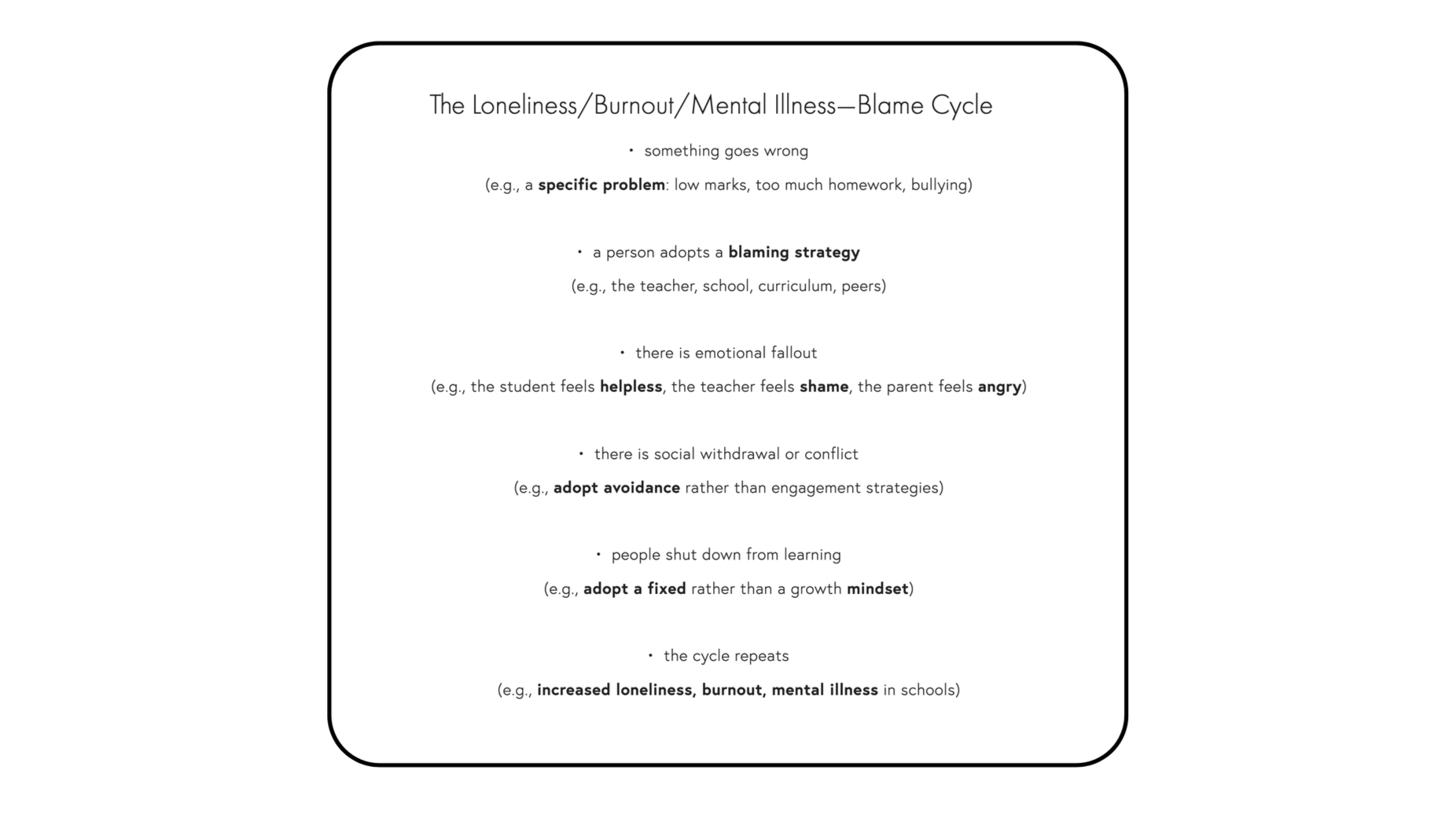
And the reality is…
Loneliness, burnout, and mental health challenges
are Pervasive in schools,
—impacting students, teachers, and parents—
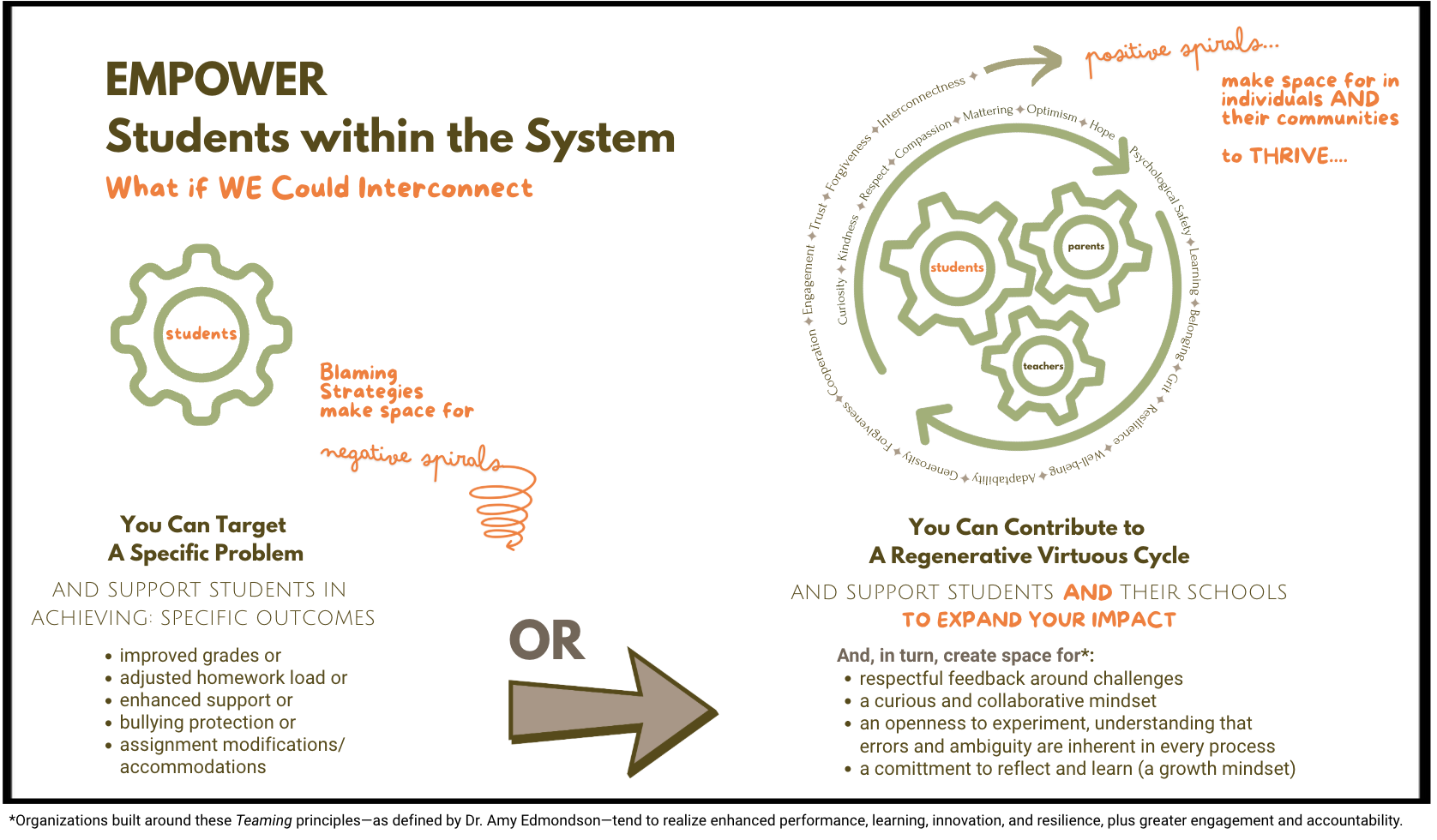
What if, Instead, WE Could Work Together
To Help Each Other Grow
At Growing Humanity,
We’ll show you how to
🌱 Navigate specific outcomes by also contributing to
REGENERATIVE VIRTUOUS CYCLES of growth.
We will show you how to bring out and leverage the best of what makes all of us human in schools.
🌱 Use our tools and strategies to nurture kids and how they interact with school
using an applied sense of:
our shared vulnerabilities
the complexities associated with educating kids in today’s world, and
our potential for goodness in how we treat ourselves, one another, and our schools.